Before we jump into things today, a big announcement. I’m rebranding Extra Tokens to Tiny Big Moves.
I realized that I liked writing about all sorts of product decisions more than just AI. I want to help you build better products, whether that’s a mobile app, a supplement brand, or even a dental practice. If you’re working on a product or service, Tiny Big Moves will show you new ways to improve it.
Now let’s get into it.
It’s been a long while since I’ve been on a dating app. The only thing I swipe right on now is the Taco Bell app when ordering my Mexican Pizza (sub beans), a Chalupa, and as much fire sauce as my bag will hold.
One of the worst parts of dating is ghosting, when someone decides, “What if I just didn’t respond anymore?” Also, the worst part about job interviewing tbh. What happened to basic human decency?
This week we’re diving into one of the most well-known apps, Hinge, and a product change they made to reduce ghosting.
The Backstory
How Hinge got here.
Dating apps have a difficult incentive problem.
Getting a new match is exciting. Replying to the seven people already sitting in your inbox? Much less exciting.
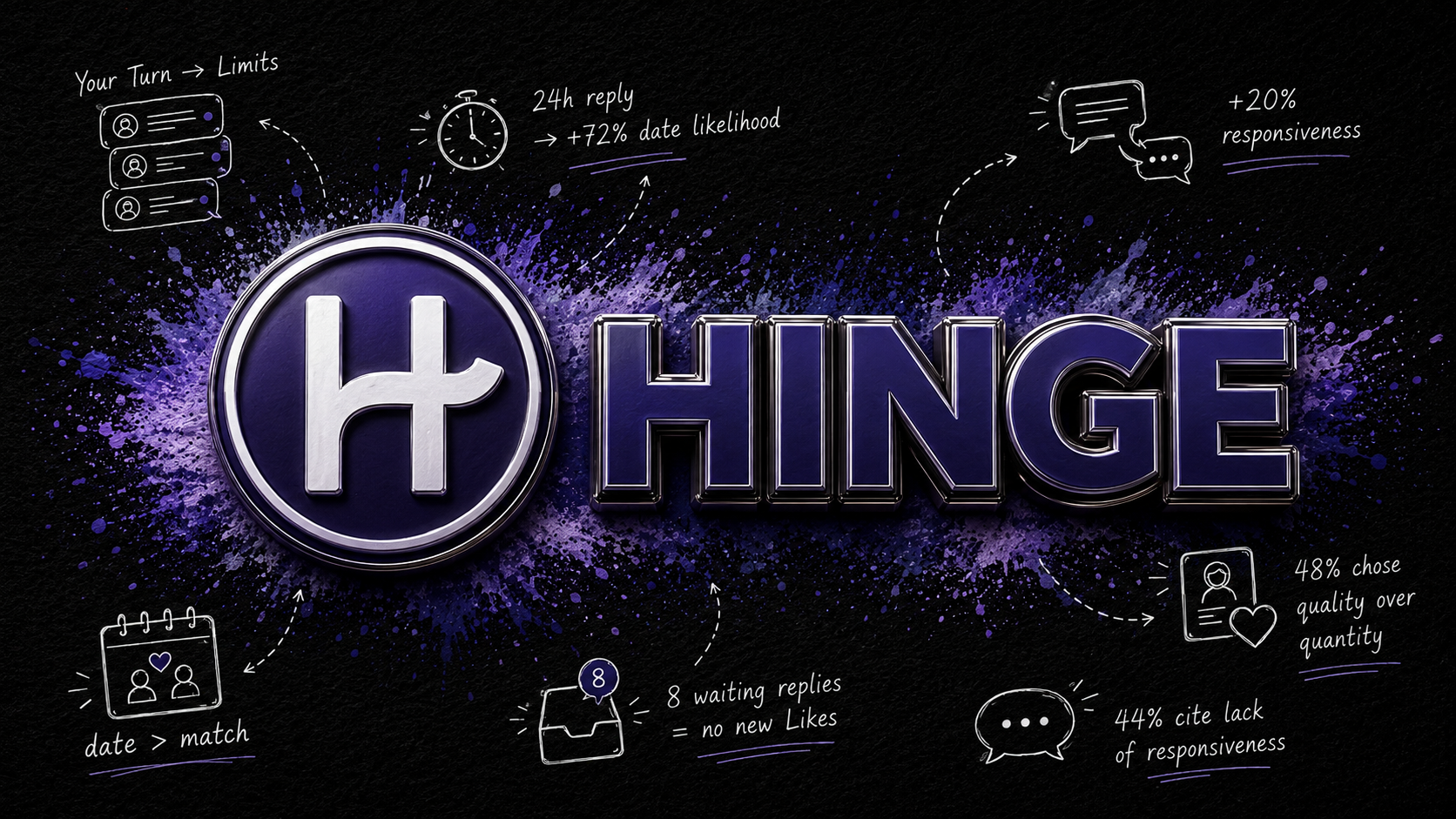
So, in 2017, it launched Your Turn, which reminded you when someone was waiting for your reply. It also introduced a Hide feature so you could clean up conversations without unmatching someone entirely. In an early test, Hinge said Your Turn reduced matches that failed to turn into conversations by 25%.
But reminders could only do so much. Hinge found that just 23% of people who ghosted said they had gotten busy and forgotten. The majority of ghosters were actively choosing not to respond, and the Your Turn feature did nothing to change that.
Hinge found that 44% of daters cited lack of responsiveness as a top dating challenge. The person doing the ignoring wasn’t necessarily having a great time either. CEO Justin McLeod said users were feeling “overwhelmed, distracted, and, simply put, burnt out.” He also told Fast Company that the more matches people accumulated, the less likely they were to respond.
And ghosting was a business problem as well. Hinge considers a date to be the ultimate measure of success, not just a match. And if users aren’t actually talking to each other, then they probably won’t end up on a date.
So Hinge pulled a Hitch and took matters into their own hands.
SPONSORED BY

Stride builds teams for early-stage NYC startups and is run by two former PMs who spent the last decade hiring at companies like Amazon, Microsoft, PwC, and VC-backed startups.
If you're struggling to hire or looking for your next role, reach out to their founders: Zakir Tyebjee and Wes Repass.
The Tiny Big Move
The single decision that changed how users behaved.
Hinge knew that matches where the first message got a response within 24 hours were 72% more likely to result in a date.
So, in May 2024, Hinge began testing Your Turn Limits. During the test, if eight or more people were waiting for your response, you could no longer send or receive new Likes.
If you wanted more matches, you needed to either reply to someone or end the conversation. They weren’t limiting the number of people you could talk to, but they wouldn’t let you leave more than eight matches hanging.

Must be nice to get 8 matches
The results were incredible: the test increased responsiveness on the app by 20%. And almost half (48%) of users said the feature helped them focus more on quality over quantity of their matches.
Adding these limits forced users to be more thoughtful about the matches they already had, improving the experience for all.
The Psychology
Hinge explains the feature through choice overload. As Hinge’s Director of Relationship Science put it: “Psychology research shows that when we are presented with too many options, we often experience analysis paralysis — and decide to make no decision at all.”
But there’s another reason those non-decisions pile up: closing an option means losing it. Even back in 2017, some Hinge users didn’t want to unmatch dead conversations because they preferred to keep them around “just in case.”
Users were hoarding matches, the same way I hoard wired earbuds handed out on flights. They had no intention of messaging these matches, but unmatching them meant deciding you’d never message them. And what if you changed your mind?
That’s where ideas like loss aversion and anticipated regret come in. Giving up an option can feel more consequential than simply doing nothing, so the easiest choice is often: Don’t reply. Don’t unmatch. Keep the option open.
The problem is that when keeping options open is free, they accumulate and become overwhelming. Your Turn Limits fixes that. Once enough conversations pile up, you can preserve the options you already have or keep collecting new ones, but you can’t do both.
SPONSORED BY

You bought something online with a credit card. You may have even used the “right” credit card.
But did you:
Activate offers on your credit cards
Use a shopping portal
Check for heavily discounted gift cards
Shoppers who use Savewise earn 7-10x more points & miles for things they’re already buying.
Savewise finds every way for you to earn rewards and puts them all in one place.
The Takeaway
Products often make it incredibly easy to accumulate possibilities. Generate another concept. Save another candidate. Start another task. Accept another lead.
The problem starts when collecting more options becomes a substitute for making progress. For Hinge, another match isn’t the real outcome. A date is. If accumulating matches makes people less likely to respond, have conversations, and eventually go on dates, then giving users unlimited optionality can actually work against the product’s goal.
This might apply to your own product if:
Intake is cheap. Saving, starting, accepting, or generating takes almost no effort.
Resolution is harder. Choosing, finishing, rejecting, or committing takes thought and can feel irreversible.
Options pile up faster than users resolve them, hindering success.
If these are true, then you may need to connect getting more with making progress on what you already have.
An AI product could ask users to shortlist three concepts before generating twenty more. A fitness app could have users commit to a plan for a week before trying out a new one. A marketplace could stop sending a contractor new leads until they respond to or decline some of the customers already waiting.
So ask yourself: What can users endlessly accumulate in my product, and is it making them less likely to reach the outcome we both actually care about?
Reply to this email and let me know what you think of the rebrand! Also, if you have any ideas for product decisions I should cover, let me know. And for those of you still on Hinge, good luck out there.
— Amaraj (aka been ghosted on Facebook Marketplace three times already this month)
The Meme
